07-27-08
Scotland, Pt. 2
Between a castle rock and an Arthur's Seat
We awoke to fog blanketing a quiet city and opted for a cheap breakfast in the hostel; Kevin (of Dundee) joined us. He shared the special pleasure some (most?) Scots take in irritating England. With its own Parliament, Scotland can make laws for their people, and any laws that England makes, they are not required to follow at all. Additionally, the Scottish government can even print its own money.
Speaking of money, we were both due for an ATM visit, so off we ventured into the misty morning. Unsurprisingly for a Sunday, the city was silent – almost deserted – as we made our way down to Princes Street Gardens. Now functioning as the city’s main public park, it was in the old days a man-made loch and waste receptacle. Nearby, the gothic spire of the Sir Walter Scott Monument towered 200 feet above its surroundings. A piper was posted up there, and in short order, the calm was pierced by the sound of bagpipes. I loved it, but I wonder how the neighbors felt!
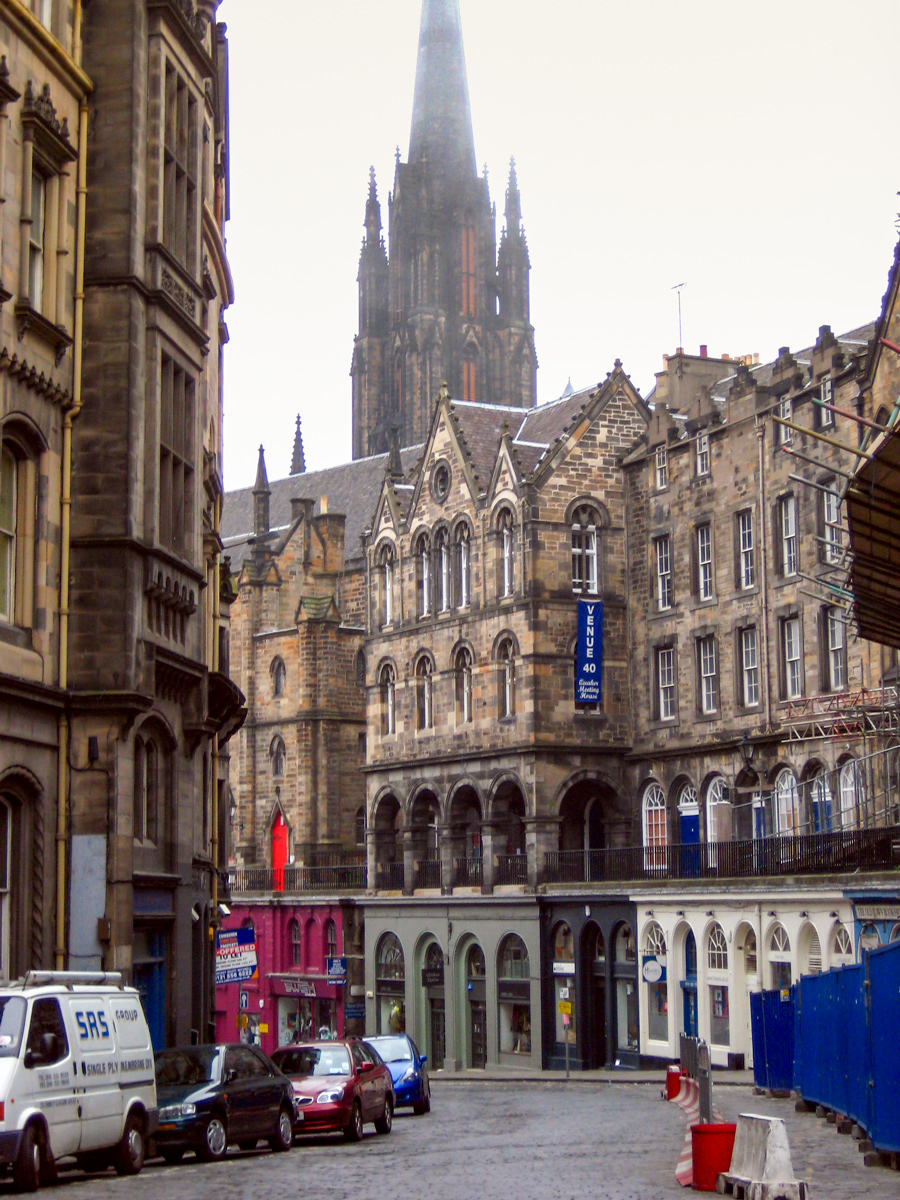

Now flush with cash (ha, ha) we headed up the hill to Edinburgh Castle. The ancient fortress, perched high upon its rock, appeared very well preserved and restored, having been designated a protected historical landmark since the early 1990s. Inside the castle walls, structures dating to the 16th century seemed to emerge from the stone. I was rather in awe of the place, with its history stretching back so far, having thought to be inhabited since before the early middle ages. The chapel, built in the 12th century and thought to be the oldest building in Edinburgh, was particularly impressive. A passing tour guide told his group it’s a good place to get married not only because of its historical significance, but because “only 20 of your relatives can fit inside!”
The castle vaults, long ago used as a prison, housed a multi-national population. The old, heavy wooden doors to the vaults were covered in etchings made by the prisoners over time. In particular, there was an American flag, probably etched during the American Revolutionary War, and thought to be one of its earliest depictions. I thought about what the flag must have meant to the prisoner, fighting for independence only to be captured and brought here via the port of Leith, and imprisoned an entire ocean away from home.


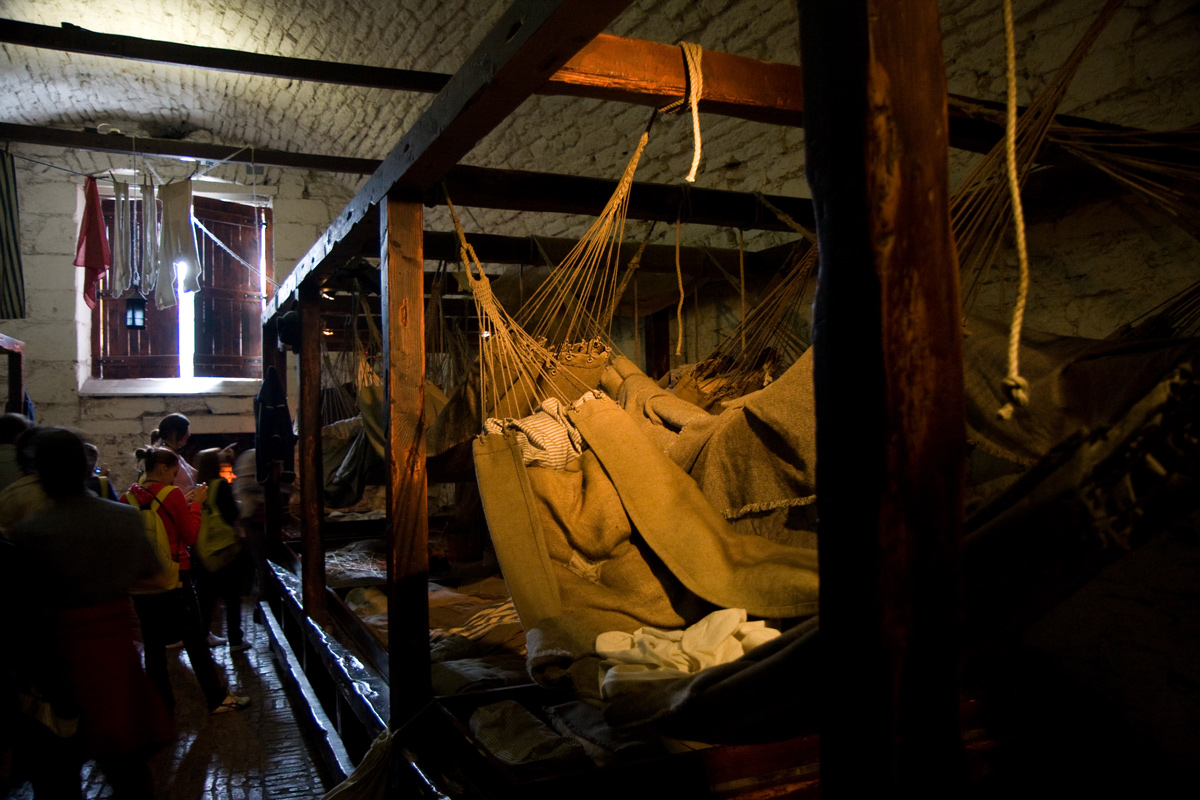
After perusing the exhibits in the museum of the Royal Scots Dragoon Guards – a distinguished military regiment – we’d absorbed enough history and were feeling a little loopy. The sun was making a welcome appearance, burning off the clouds, so we decided it was time to head toward Holyrood Park for a hike up Arthur’s Seat. We stopped at City Cafe on Blair Street to fuel up, enjoying a brunch of french toast, bacon, and crepe, surrounded by the beautiful architecture of Old Town.
At the end of the Royal Mile, we hung a right at the Scottish Parliament building, which formally opened just 4 years earlier. I wondered if it’s location right across the street from Holyroodhouse – one of the royal residences – might be another jab at the English. We found the trail leading into the park not much farther on, and in high spirits, began the climb.


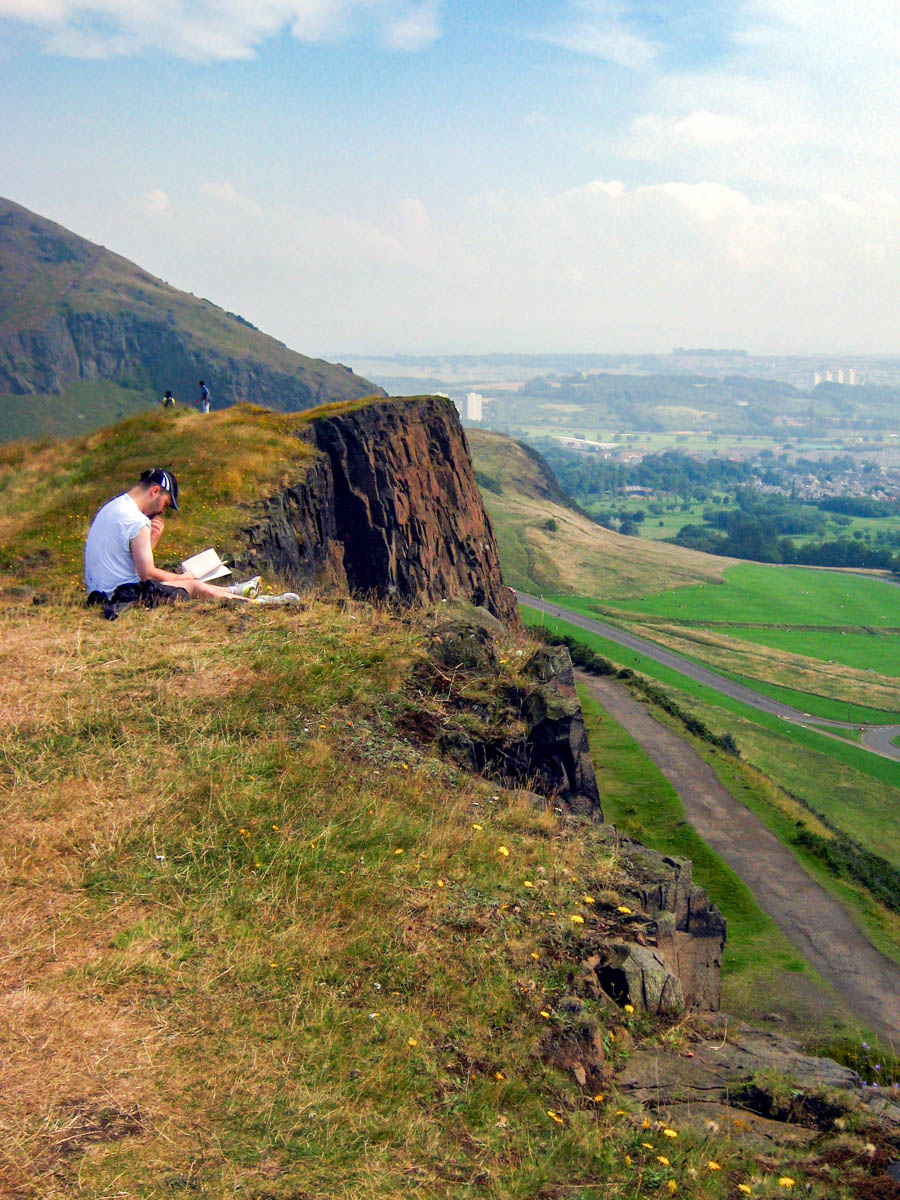
All along the edge of Salisbury Crags there were people drawing, writing, or just relaxing in the sun. The path to Arthur’s Seat, on the other hand, was more steep and strenuous. We took our time, pausing to enjoy the wildflowers and scenery, eventually arriving at the top at 251 meters elevation. I was kind of blown away at how accessible this beautiful spot was, and in the middle of a big city, no less. From here we could trace our route through the sprawl of Edinburgh.
With the sun beating down on us, I began to develop a new appreciation for the cool morning fog. We descended, and close to the end of the trail, came across the remains of St. Anthony’s Chapel, a relic of the 15th century. I was struck by the idea that people, centuries ago, gathered in the very spot where we stood. We ran into Abhay (one of our hostelmates from London) on our return trip past Parliament. He said he’d done a city tour of Edinburgh, and we told him about the castle and our hike. Before parting ways, we heartily endorsed his idea to buy a bottle of water for the climb.


I was tired, but enthusiastic about a change of clothes and the prospect of dinner. We stopped at a burger joint on the Royal Mile. Jason was in heaven, having somehow tragically subsisted for three months without a burger since leaving the U.S. Apparently they’re quite hard to find in Germany! We joked that our non-adventurous culinary choice was justified due to the menu’s references to “Scottish beef” and “Scottish cheddar” – truly, authentic cuisine.
Afterward, we searched for a pub, but caught up in a crowd watching a street performer named Arizona Jones. Rather than brawl with Nazis or search for relics to appropriate, he climbed atop a post held in place by volunteers who then tossed torches up to him. He lit each torch and began to juggle them. For his final trick, he lit a whip on fire and attempted to put out the flames by cracking it. It took him a few tries, one of which caused the whip to wrap around him, drawing a gasp from the crowd, but it did work in the end. It’s hard out there for a showman.
We found our pints at Deacon Brodie’s. It was definitely my kind of place – old enough that it might as well have been a historical landmark, with a beautiful original pressed metal ceiling. Apparently, the pub’s namesake was an upstanding citizen by day and a notorious burglar by night. This double life formed the basis for the Robert Louis Stevenson novel The Strange Case of Dr. Jekyll and Mr. Hyde. There was no sign of any strange beasts lurking about as we nursed our beers and watched the sea mist roll in.


On returning to the hostel, we found that a number of roommates had left, and new ones had taken their places. One of these was a talkative Chicagoan who was quite proud of having spent time among the locals in the highlands. He wouldn’t let a word in edgewise. I think the way he talked about his experience as if it was so superior to ours gave me a feeling of inauthenticity from him – an assessment, I learned later, that Bret and Jason shared.
I would’ve been happy to stay in, but, at some point, someone managed to convince everyone to get drinks. So we found ourselves at the Bank Bar, a fine establishment housed in an old bank building – complete with vaults in the basement. I found it difficult to enjoy the nightlife. I was too aware of being an outsider, and, I guess, not willing to embrace it – not like the Chicagoan, who seemed able to pretend that anyone in Scotland would be interested in learning more about him. To my surprise, though, he wasn’t really mingling, either. In hindsight, maybe he felt awkward or overwhelmed too, and I could have been kinder to him. But for the time being, it took all I had to just enjoy a beer and people watch.
Later, we roamed the Royal Mile at night, watching the voluminous mist flow under the streetlights. Bret remarked how European everything looked: stone-paved streets, patina-clad buildings, fog, black taxi cabs.