07-30-08
Scotland, Pt. 5
Oh my, it's Oban
It was a beautiful morning, but we couldn’t hang around long enough to enjoy it. We noshed on apples and prepackaged blueberry muffins as the bus carried us through Glasgow – no time here, either, before switching lines. The route from Glasgow wound along the west shore of Loch Lomond. The scenery transformed – green, misty, mountainous. In Inverary, a small, pleasantly scenic town on Loch Fyne, the bus driver pulled over and gruffly suggested everyone stretch their legs.
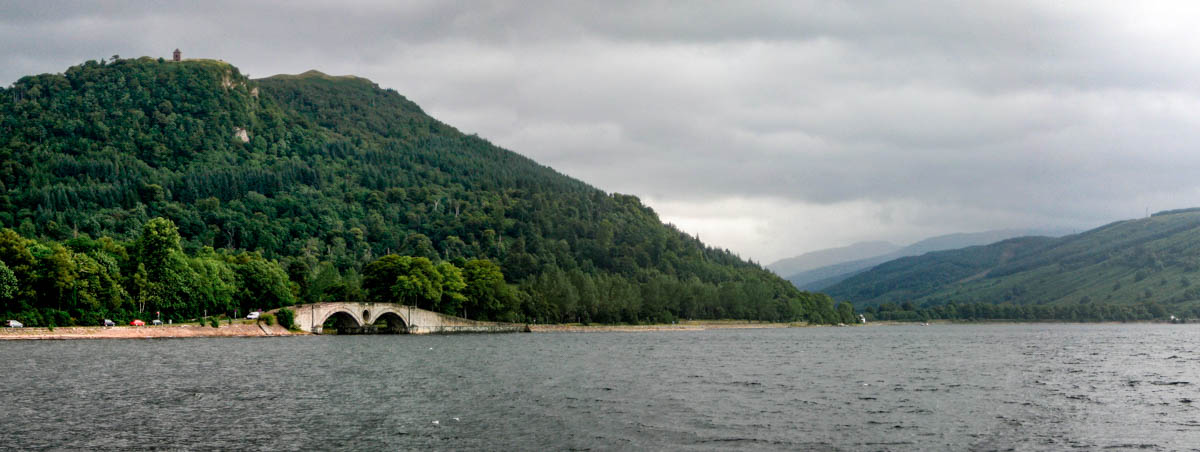
On the final leg to Oban, the driver kept us “entertained” with his driving style, swinging the coach around tight turns and flying down hills. I saw people fly fishing in a stream and made a mental note to tell my dad about it. The bus rolled to a stop in Oban at about 11:30am. We went straight to the hostel, Oban Backpackers, to drop off our bags, but we were too early for check-in. Despite our early wake-up time and the long morning of travel, we were prepared for a full day of sightseeing. To refuel, we called on Mac T’s, a basic family buffet restaurant. The locals looked askance at us but I didn’t care as I wolfed down a plate of lasagna.
After lunch, we walked north along the beach – which is only a beach so long as the tide is low – until we joined the main road. A World War I monument afforded an opportunity for reflection as we paused to take in the view of Kerrera, the island that shelters the bay. Finally, a short climb through some woods brought us to Dunollie Castle.
The ruins, dating to the 14th century, remain unrestored. An “enter at your own risk” warning sign didn’t deter us from going in. The main structure, covered in vines, looked like it was being absorbed by the hill and its plants. I climbed a little ways up the narrow steps to see what was up there; there wasn’t much left, but I could imagine how it might’ve, at one time, accommodated people. The view of the bay was incredible. I was exhilarated by seeing a different side of Scotland.


We headed back into town and along the streets up a hill to reach McCaig’s Tower. John Stewart McCaig, a philanthropist, had the ring-like structure commissioned as a way to keep stonemasons working in the winter months. He died before he could see it fully completed. The inner area of the ring was meant to feature statues and monuments to his family. Ninety-four arches gave ninety-four views over all of Oban.

What now? Why, another castle, of course. We decided to take the bus to Dunbeg and walk the rest of the way to Dunstaffnage Castle. A friendly man who stood next to us in line told us where to hop off, going so far as to hit the STOP button for us while we were yammering away about something (thanks, guy!). From there it was probably a 25 minute walk to the castle grounds, past fields of sheep and the Scottish Association for Marine Sciences.
Dunstaffnage was much better maintained than Dunollie, being the property of Historic Scotland, which also maintains hundreds of other monuments across the country. We explored a bit inside before walking out to a chapel located nearby in the woods. The chapel, like the castle, was built sometime in the 13th century and you can still see some examples of fine workmanship in the stone.


Instead of walking back to the castle, we used Jason’s GPS to guide us to the shoreline. The ground was peculiarly spongy here. I wasn’t convinced we had solid footing at all – would one of us go plunging down with a wrong step? But we were rewarded by excellent views and a rainbow spanning the distance between a distant hill and the bridge to Connel.


Tired and happy, we headed back to the bus and were finally able to officially check in at the hostel. The staff recommended Coaster’s for dinner. It was a nice little place with big windows facing the sea, which inspired us to order fish and chips. We spent the rest of the evening trying to plan out the next couple days, and I went to sleep excited for the morning, when we would visit the home of Clan MacLean – Duart Castle – on the Isle of Mull.