03-18-10
Design Themes in Mass Effect
Critical Comparison
Notice: This essay contains spoilers and assumes some knowledge about the Mass Effect series.
After playing Mass Effect 2, I was compelled to go back and re-play Mass Effect 1. I was interested in taking a closer look at how it differed from its predecessor, given the notable omission of some gameplay elements that were present in the first game. What I found was that each game does different things well, and that the developers’ choices seemed to follow from an overall ‘main theme’ of each game.
Rather than being a simple continuation of the series, Mass Effect 2 is designed around its own central concept. In Christina Norman’s talk at the 2010 Game Developers Conference, “a feeling of intensity” was the core tenet that drove many of the changes directly affecting the player experience. The selection of a theme unified the vision and ultimately the design decisions for Mass Effect 2, but in a way this made it seem as if the first game had been aimless, or, perhaps, too open. While that surely wasn’t intentional, I wondered what Mass Effect 1‘s design theme might be, as it always felt cohesive to me. What Mass Effect 1 captures perfectly is that epic sci-fi cinematic experience that makes space feel exciting and limitless. Its theme, then, could be characterized as “exploration and awe” and we can look at its role in the design of that game.
Game Systems
Progression
In terms of how a player progresses through the game, these overarching themes are clearly laid out. For example, while both games are described as action RPGs, Mass Effect 2 focuses on the feeling of intensity by not only streamlining combat but also creating the atmosphere that you may have to fight at any time. In comparison, Mass Effect 1 emphasizes exploration, discovery, and cultural politics – not unlike franchises such as Star Trek and Babylon 5. It achieves its “space opera” vastness by allowing you to actually land on planets and explore, as well as by providing experience points (XP) for virtually everything you do. These systems help the player feel that their time investment in exploration is paying off. The sequel leaves this sense of exploration and progress in the background. A mission summary screen describes how XP is meted out, and the exploration of planets is contained in a fewer number of encounters in the form of side quests. This puts more focus on the narrative and emphasizes your character’s accomplishments within it.
Inventory
Mass Effect 1 encourages players to dig deep into their own inventory, upgrades, and attributes, but if the player isn’t diligent about maintaining these things, the options can feel overwhelming. There’s also the fact that just by playing through the game, a player picks up so much equipment and so many upgrades, of increasingly better quality, that they may actually end up never using an in-game store or trader in Mass Effect 1. Despite this imbalance, managing items gives a feeling of satisfaction as the player personally provides the best equipment to each individual squad member.


Mass Effect 2 streamlines the inventory experience, allowing players to understand upgrades and attributes on an at-a-glance basis. This comes at the cost of equipment not feeling very hard-won – for example, a weapon upgrade applying to all weapons across the squad. In addition, it doesn’t seem to matter who wields what weapon or equipment, unlike Mass Effect 1, in which squadmates could have attribute points in specific weapons training. Mass Effect 2 squad mates, then, feel like specialists only in that they have their own unique powers. However, not having to worry much about upgrades or outfitting individual squad members (especially with the increase in number of squad members in Mass Effect 2), and the ease of purchasing stuff, definitely helps players get to the action – in keeping with the theme of intensity.
Game World
Transitional Content
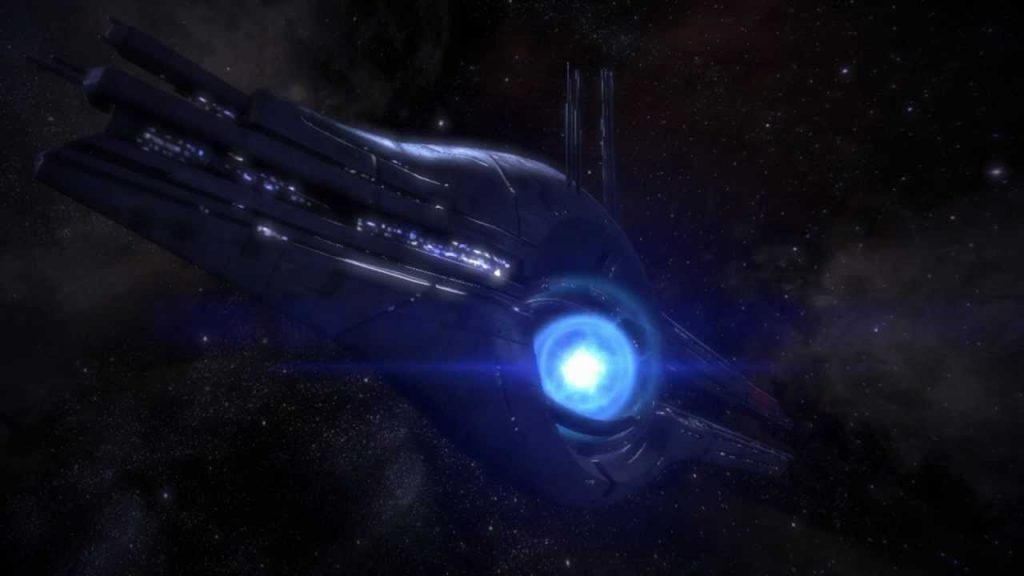
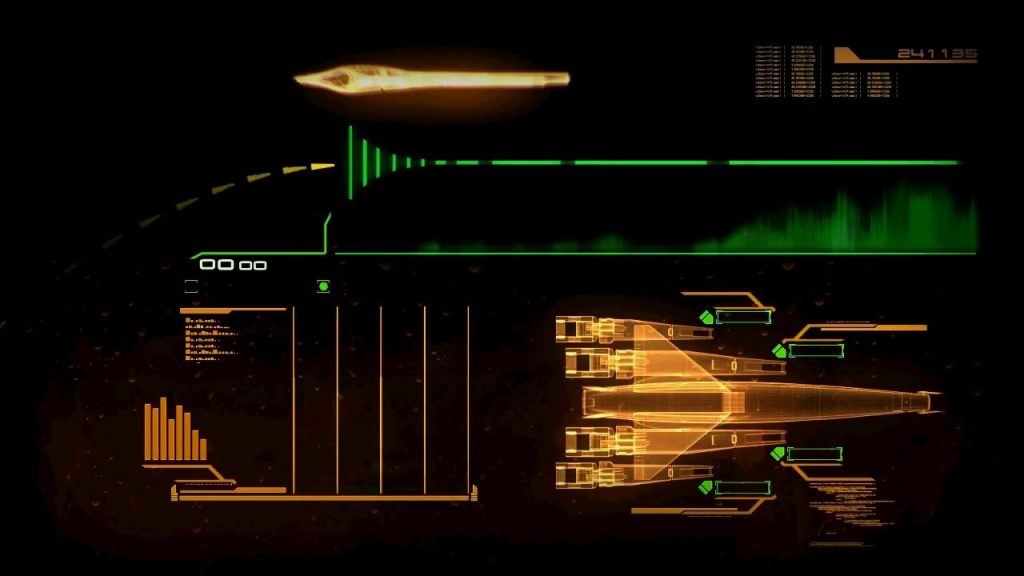
Even loading areas seem to fit into each theme. Both games have loading screens. Mass Effect 1 shows an animation of a mass relay – a representation of your portal to the wider galaxy. Mass Effect 2 uses loading screens to look at the nuts and bolts of the world, often related to what the player is doing, for example: a flight path of your shuttle approaching the Omega space station, or a cut-away view of the decks on the Normandy when the player takes the elevator.
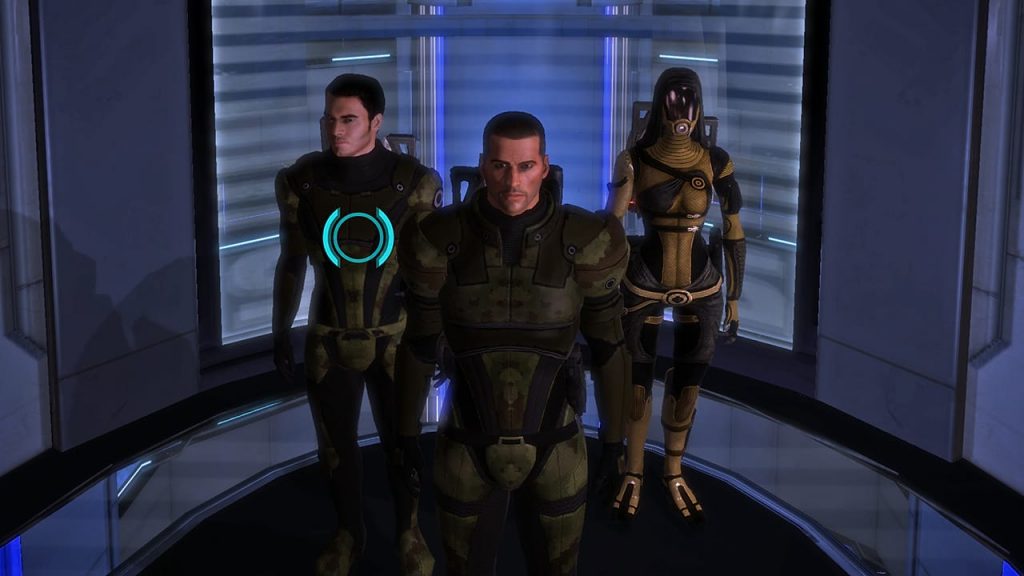
The games take different approaches to transmitting in-world information and events, as well. The notoriously long elevator rides in Mass Effect 1 frustrate many players, but the feature complements the game’s theme. The player’s exploits might be in a news report, or their squadmates might have a conversation that reveals insights about their personalities. In other words, the player has stepped into a vast universe of cultures and events. Mass Effect 2 compacts the delivery of this information into an optional part of the experience. The player can simply breeze past news terminals and the like, maintaining that idea of continuous intense play. What matters is what’s happening in the moment. While one can lament the loss of detail, it’s hard to justify trapping players in an elevator!
Role of Characters
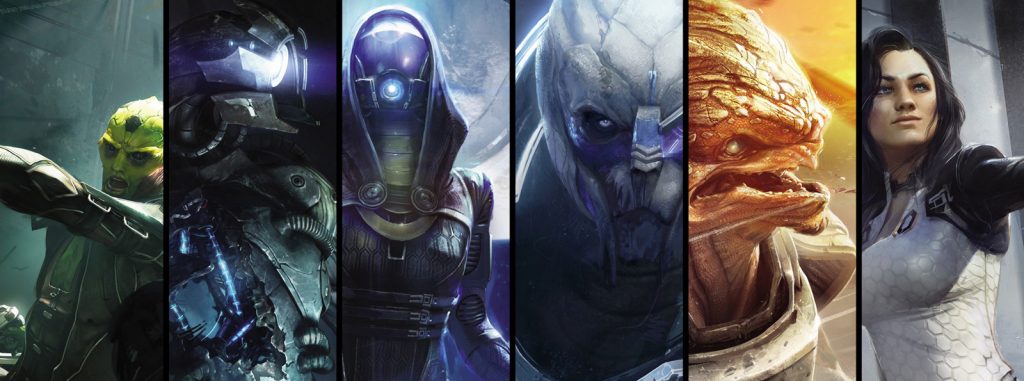
In Mass Effect 2, the player is given a list of the teammates to pick up – it’s essentially a checklist, even though the player can choose not to recruit some of them. While this provides a much more direct experience, especially for players who are less accustomed to exploring, I have a greater appreciation for how the player meets their team in the first game. The experience of coming across them is less varied, but much more organic and natural – the player bumps into them more or less because they happen to be in an area through which the player is passing. Exploring rewards the player with teammates and the encounters are interwoven into the story and world – these are characters that existed before the player ever showed up, doing their own thing. Mass Effect 2 loses that organic feeling but opens up a potentially unbroken and direct story experience by giving you a list of people and their locations. This also gives Mass Effect 2 the opportunity to build unique intense set pieces around each recruitment.
Another nice thing about having more teammates in Mass Effect 2 is that the player is encouraged to try out different squad members on a consistent basis just to see how they perform (especially with teammates with similar powers, it’s less obvious which one to take). Mass Effect 1, on the other hand, actually encouraged the player to stick with single characters by awarding achievements for doing so. How the player equips and levels up their squadmates may also influence their preference for who to bring on a mission. As a result I felt that squad selection in Mass Effect 1 doesn’t change as much, acting more as a tight team of traditional action heroes, whereas Mass Effect 2 keeps things a bit more fresh and interesting, especially if you pick a character who isn’t necessarily ideal for a particular mission – leading to more likable characters overall.
In Mass Effect 1, characters suggest themselves or other characters for certain missions based purely on the narrative; some characters get upset when the player doesn’t bring them along on a mission that involves them, again making the universe seem quite large, as if these characters had lives and personalities outside of the Illusive Man’s dossiers. It’s certainly worth pointing out, though, that Mass Effect 2 doesn’t ignore the fact that the characters and the player’s actions are interwoven with the narrative. A number of plot hooks link to the player’s actions in the first game, and coming across characters from that experience brings on feelings of nostalgia and novelty, because they remember your adventures together. The level of detail in this regard promotes the continual play experience central to Mass Effect 2 and validates your actions in Mass Effect 1.
Narrative
The tone found in each respective story differs. In keeping with the traditional vast sci-fi epic, Mass Effect 1 has a relatively simple “Hero’s Journey” storyline – a slow burn, building up to the big final confrontation, with one or two really exciting main story surprises. In Mass Effect 2‘s narrative, the developers did a great job delivering on the central theme: they shock the player immediately in the beginning of the game; abduct the entire crew against the player’s will; and make you think hard about how your decisions might eventually end up killing your crewmates. ME2 is ominous and aggressive where ME1 has more of a hopeful “Gee whiz, it’s the future!” approach. The addition of quicktime Paragon/Renegade interruption actions in Mass Effect 2 ratchet up the intensity by giving the player immediate power to change the course of dialog and narrative.
Yet, Mass Effect 2 took away some of the player’s power over the story by toning down the spirit of exploration in favor of intensity. While the tank-like Mako missions featured in the first game are reviled by a large part of the Mass Effect community, at least they allow the player to visit some distant sector and land on a planet where nobody has set foot before, delivering on one of the big promises of epic sci-fi. Mass Effect 1 is an opportunity to see a variety of exotic worlds that are often beautifully presented, a chance to be a deep space explorer. The game seems to specialize in big, open spaces – the Citadel feels like the huge space station it’s described as, and contains characters that the player can help if you take a moment to talk to them. Unfortunately, a lot of the gameplay taking place outside of the main storyline consists of tediously driving the Mako around unforgiving landscapes just to loot a crashed spacecraft or prospect some minerals – the payoff for exploration simply isn’t high enough, even though it fit in nicely with the theme of the game. Mass Effect 2, though feeling a bit more compartmentalized and objective-focused, is good at creating a story out of each side mission. They each have a narrative and a uniqueness, which is a big improvement, especially given the heavy re-use of assets in side missions in Mass Effect 1. The tradeoff is feeling less like an explorer and more like a galactic sheriff.

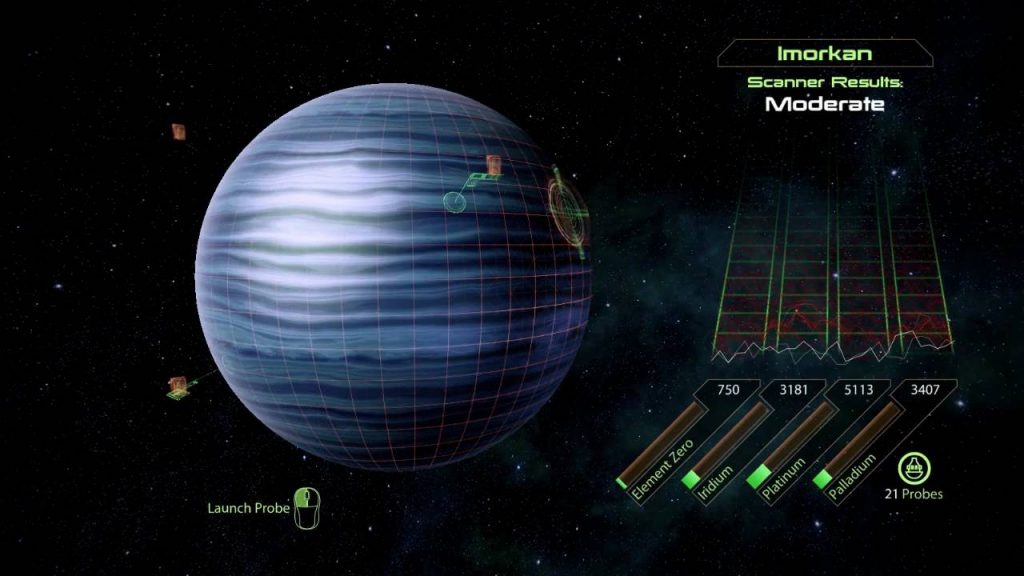
ME2‘s removal of the Mako also resulted in the galactic map shouldering the sense of exploration single-handedly. Through the map, the player scans planets for resources by firing probes to the surface. It seems to be the only thing that interrupts the intensity of the game experience, although some space to take a break from the action is welcome. Unfortunately, planet scanning is further limited by the need to buy fuel and probes, which means the player is interrupted just to keep scanning. The system is not a very good replacement, because it makes exploration of the universe more tedious than the Mako does. At least when the player is roving the surface of a planet, it feels something like making progress, or at least there’s the satisfaction of having a destination.
In Mass Effect 2, the player just watches their mineral counts go up (and uncovers the occasional distress call). Perhaps my biggest problem with planet scanning in ME2 is that it doesn’t help tell the story of the game. Though each planet has an excellent written description, the player can’t really generate their own stories to attach to them unless they uncover a side mission via scanning. Even the descriptions fall short at times – one planet recounts how an angry space pirate carved their name into the surface of a planet, but the inscription is not visible on the planet model. Another planet claims it’s an arid world with no oceans, but the texture looks like the opposite. It just doesn’t feel very reliable as a form of exploration or intensity, and because of this, doesn’t seem to fit in either game because it falls out of each design theme.
Conclusions
Of course, there are things both games simply nailed, and these are core values of the overall Mass Effect experience: a complex, emotionally engaging Hero’s Journey; a complete, consistent, deeply imagined universe; fantastic cinematic narrative design; and great sound design. The one thing that both games seem to deal with poorly is that if you want to “walk the line” – that is, act on both your Paragon and Renegade desires – there is no benefit in doing so as your abilities to be persuasive in conversation and win the loyalty of your squad mates are diminished (however, this is my play preference, as the results feel more ‘real’ in the sense that real-life situations rarely have easy solutions).
After comparing the games, I couldn’t help but think ahead to the inevitable closing chapter of the series. If the first game introduces you to a vast, awe-inspiring world begging to be explored, and the second game focuses on the difficulty of surviving and winning trust in that world, then it seems likely the third game will deal with how you – with the benefit of your experiences in the other games – choose to leave your mark on that world. It will be interesting to see what kinds of design choices shape ME3 based on such a theme. It’s a tall order to bring a satisfying end to a multitude of varying player experiences, but if this comparison reveals anything, it’s that building the game around a central theme can help guide the decisions that are right for that particular journey.