07-28-08
Scotland, Pt. 3
Leith and back again
The mist lasted throughout the night and well into the morning. We woke up a bit late thanks to the previous day’s walkabout, but managed to get ourselves back out there by 10am. On our walk to the National Museum of Scotland, we noticed many pubs open, with patrons enjoying a pint with breakfast. It seemed a peculiar habit to us, but we had to admit the thought of taking shelter from the fog with a beer wasn’t totally off-putting.
The ground floor of the museum featured exhibits on early Scotland – how it was formed by glaciation, excavated prehistoric artifacts like jewelry, details on periods of Viking occupation. Each floor represented another stage in the development of Scotland. As we ascended, we learned about the Picts, the early confederation of pre-Christianity tribes, religion in Scotland and the introduction of Christianity, and much later about the Covenanters whose push for Presbyterianism led to war.
Working examples of Scottish ingenuity such as steam engines and water pumps characterized the exhibits on modern history. Also represented was a strong manufacturing tradition that resulted in some impressive bridge building (e.g., the Forth Bridge, today considered a Scottish icon). At the very top of the museum, there was an open-air garden containing examples of plant life from all over Scotland.


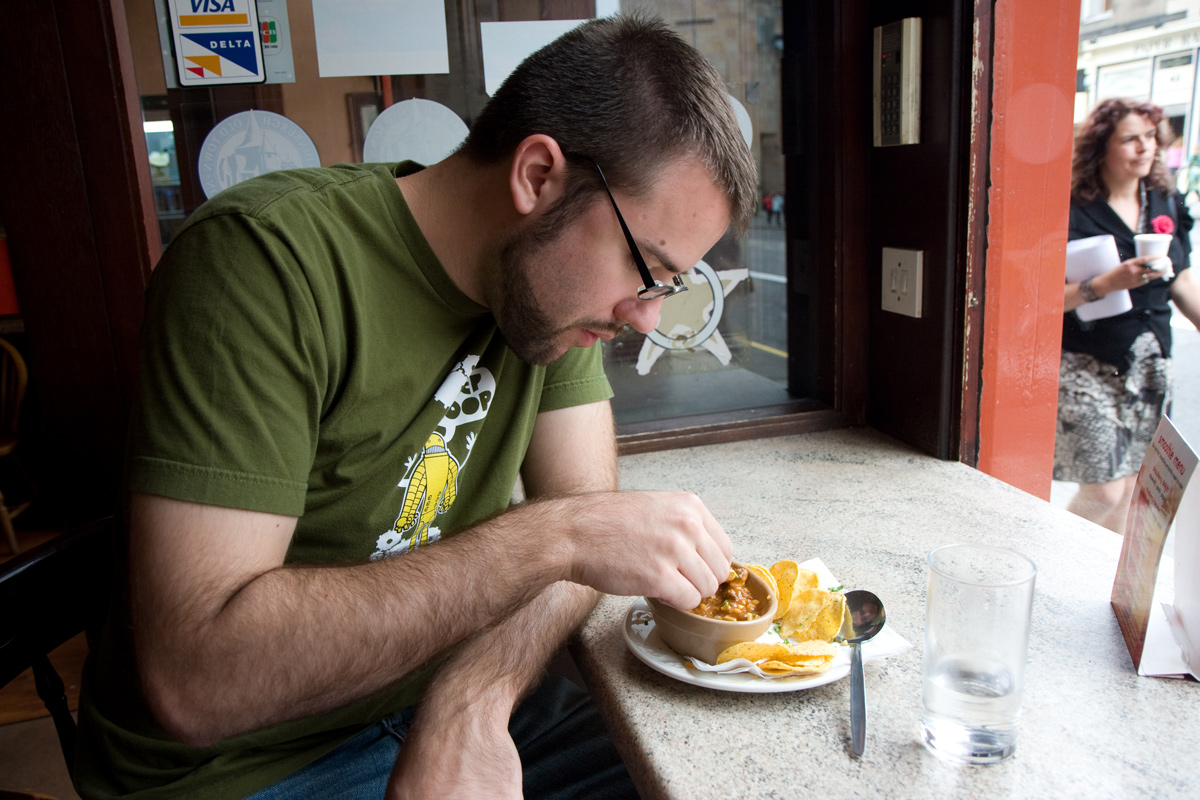
For lunch we walked across the street to a small café called the Elephant House, where it’s said that J.K. Rowling wrote parts of Harry Potter. It was a quirky little place and I became a big fan of the cafe’s chili. An attempt to get free internet access at the library was rebuffed by the crowds. We moved on to the bus stop where we could catch a ride to Leith. I wanted to indulge my interest in nautical history and see the Royal Yacht Britannia. It was 1 pound 10 pence for the ride to Ocean Terminal. Though time consuming – about 45 minutes one-way to go a few miles – it definitely beat walking.
Britannia is very stately (and storied). A product of the 1950’s, and showcasing classic British ship design just as transportation was being transformed the world over by air travel, it sailed just about anywhere you can think of, and hosted many heads of state. I had no idea how much a part of history the ship was. The royal family used the yacht for holidays, sure, but they also took care of business while on board and often escorted diplomats.


An audio tour led us through almost every space on the ship – staterooms, the bridge, the decks, sun room, below decks, engine room, officers mess and quarters, as well as the well-appointed areas which the royals frequented. The ship also featured a royal barge to take people ashore. While I’m sure “barge” is an accurate way to describe its function, I would describe it as more of a luxurious speedboat.
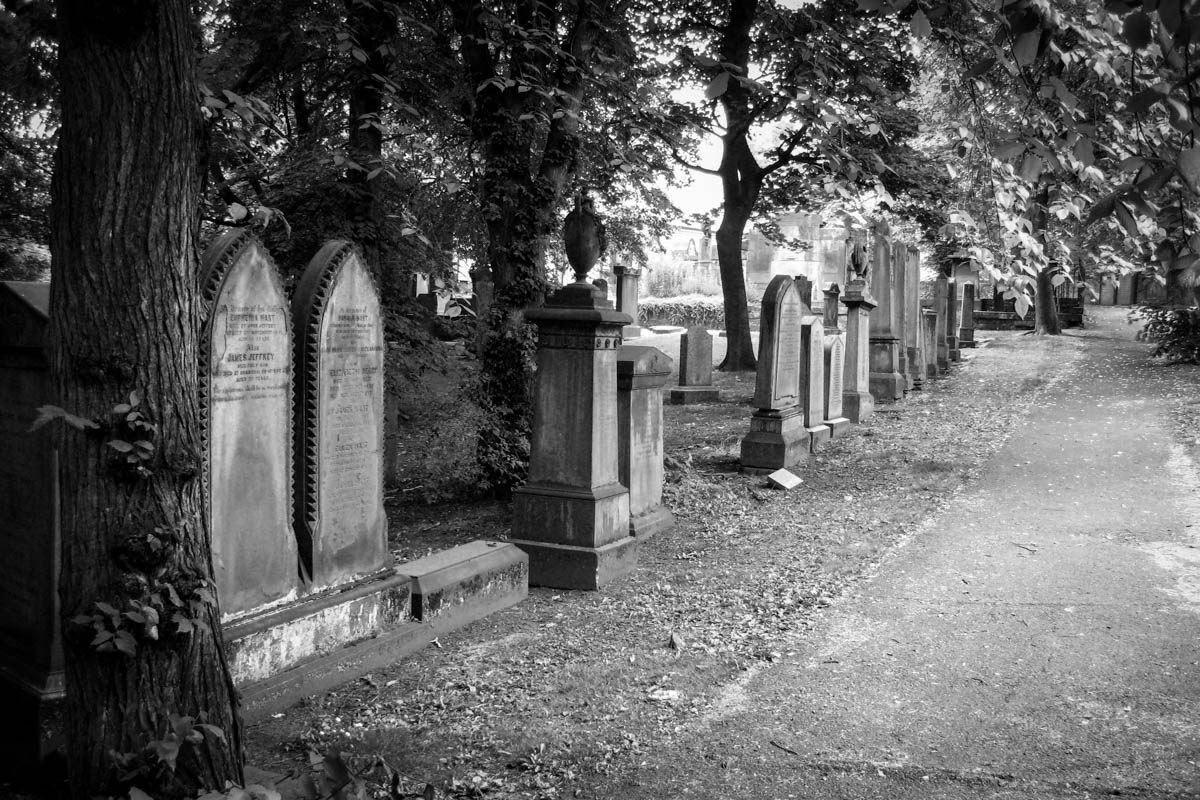
The return bus took a slightly different route, making me a little nervous, but eventually it returned to Princes Street. We walked east a bit to Rutland Place and hung a left so that we could approach the hostel from the opposite side than usual. Our reward for the detour was an awesome old cemetery – I think part of St. Cuthbert’s cathedral – with the castle looming above. Large, moss-covered headstones completed the scene, making it feel like we’d stepped back in time.

We followed Lothian Road to King’s Stables Road and then back up the stairs to the hostel where we cleaned up for dinner. Castle Arms offered a special “world traveler” discount due to staying at the hostel, so we took advantage of that. Bangers and mash hit the spot.
After dinner we moseyed down to Mary King’s Close for a tour. When the City Chambers were built in 1753, centuries-old hidden rooms, streets and alleys were preserved beneath the new street level. They just chopped off the top part of the buildings in that area and used what was left as a foundation for the Chambers. Some of the closes and houses were filled with rubble, but a large area was left relatively untouched and only sometimes was used for storage.
We learned that when the plague reached Edinburgh, patients were treated by plague doctors who wore heavy waxen coats and beak-shaped masks which were packed full of herbs and rose petals meant to act as a filter. This didn’t stop infection – what really helped the doctors survive was the fact that disease-ridden fleas couldn’t bite through their heavy coats. I can only imagine how terrifying those doctors must have appeared to an ill and delirious individual.
Toward the end of the tour, we saw the last home to be occupied in the close, sometime in the early 1800’s, eerily well-preserved. As I stepped back, standing in what used to be a city street, I looked up at 3 stories of a building and the empty spaces that would have held windows, and at that point the close became quite real to me and I could imagine an additional 7 stories on those buildings and all the people packed into them.
After emerging from the underground, we joined Bret for a walk in Edinburgh’s New Town, which was designed by a 23-year-old contest winner in the mid 1700’s (what have you done lately?). The mist settled in again. It was nice to just be in the city, and we happened across a well-appointed bar called the Dome, housed in a grand 1800’s-era building complete with glass dome. We passed by the Waverley rail station, in awe of the nearby Balmoral Hotel, brightly lit in the fog like a vision. Eventually we made it back to the hostel, and exhausted, went to sleep.